

How to Build an Intent-First SEO & Google Ads Strategy for 2026
Get actionable steps to boost SEO and Google Ads in 2026. Understand and map keyword intent, optimize content, and drive real results.

Most SEO and Google Ads guides still start with keywords. This one starts with people, specifically, what they’re trying to accomplish when they type a query. That shift in thinking — from keyword targeting to intent mapping — is the single biggest lever most businesses haven’t fully pulled yet, and it’s becoming more important as AI shapes both how search works and how LLMs decide what to cite.
Here’s how to build an intent-first strategy that works across organic search, paid search, and AI visibility in 2026.
What Is Search Intent, and Why Does It Matter More Now?
Search intent is the underlying goal behind a query. Someone typing “how to speed up WordPress” wants to learn. Someone typing “WordPress maintenance plans” wants to buy. The words might look similar, but the intent — and the right response — are completely different.
This has always been true, but it matters more now for two reasons. First, Google’s ranking systems have gotten significantly better at recognizing intent mismatch, meaning a well-optimized page that doesn’t actually satisfy the intent will struggle even with strong technical signals. Second, LLMs like ChatGPT, Perplexity, and Google Gemini prioritize content that gives clear, direct answers to specific questions — which is exactly what intent-aligned content does.
The four standard intent categories are:
- Informational — the user wants to learn something (“how to fix slow WordPress sites”)
- Navigational — the user is looking for a specific site or page (“City of Oaks Marketing contact”)
- Commercial — the user is researching options before deciding (“best WordPress developer Raleigh”)
- Transactional — the user is ready to act (“hire WordPress developer”)
Most businesses produce informational content and transactional pages, and neglect the commercial middle. That gap is where a lot of qualified traffic gets lost.
Step 1: Audit and Classify Your Existing Keywords by Intent
Before you can fix your intent alignment, you need to know where you stand. Export your current keyword set from Google Search Console, SEMrush, or your ad platform, and tag each keyword with its intent category.
This doesn’t have to be exhaustive to be useful. Even classifying your top 50 to 100 keywords by traffic or spend will show you quickly where you’re over-invested and where there are gaps. A rough example:
| Keyword | Intent |
|---|---|
| how to speed up WordPress | Informational |
| best WordPress host 2026 | Commercial |
| WordPress maintenance plan | Transactional |
| City of Oaks Marketing | Navigational |
Tools like SEMrush Keyword Magic Tool and Ahrefs Keywords Explorer now surface intent classifications automatically, which speeds this up significantly. Google Search Console’s Performance report is also useful here — pages with high impressions and low clicks often signal an intent mismatch between your content and what the searcher actually wanted.
Step 2: Match Content and Landing Pages to Intent
Once you’ve classified your keywords, audit whether your current pages actually match the intent they’re ranking for. This is where most sites have structural problems.
A few patterns to follow:
- Informational queries need in-depth guides, FAQs, and explainer content that answers the question completely without requiring the user to go elsewhere. Our post on writing blog content that ranks covers what “complete” actually looks like in practice.
- Commercial queries need comparison pages, case studies, and solution overviews that help the user evaluate options. See our breakdown of custom WordPress development vs. page builders as an example of this format.
- Transactional queries need service or product pages with clear CTAs, trust signals, and as little friction as possible between the user and conversion.
- Navigational queries need clean branded page structure and consistent NAP (name, address, phone) data so Google can confidently surface the right destination.
The most common mistake is sending informational-intent traffic to a sales page. The user isn’t ready to buy; they’re trying to learn. That mismatch kills both conversion rate and engagement signals, which feeds back negatively into rankings.
Step 3: Restructure Your Google Ads Campaigns Around Intent
Intent-based campaign structure is one of the most underused advantages in paid search. Most ad accounts group keywords by topic or match type. Grouping by intent instead lets you write ad copy and choose landing pages that actually match what the searcher is trying to do.
In practice, that means:
- Separate campaigns or ad groups for informational, commercial, and transactional intent
- Ad copy that mirrors the user’s goal — “Download the Free Guide” for informational, “Compare Plans” for commercial, “Get a Quote Today” for transactional
- Landing pages chosen to match intent, not just topic — never send an informational-intent click to a contact form
- Negative keywords that keep intent segments clean — add transactional negatives to informational campaigns and vice versa
Google’s own guidance on Performance Max and audience signals increasingly leans on intent data, which means your campaign structure needs to align with how the platform is thinking, not just how it used to work.
Step 4: Optimize On-Page SEO and CTAs for Intent Stage
Once traffic arrives, everything on the page should reinforce that the user landed in the right place. Intent-aligned on-page optimization means:
- Headlines that mirror the query’s goal, not just the keyword (“How to Fix a Slow WordPress Site” not “WordPress Speed Services”)
- CTAs calibrated to the intent stage — soft offers (free guide, newsletter, resource download) for informational visitors; hard offers (book a call, request a quote) for transactional
- FAQ sections that answer the follow-up questions a user at that intent stage would naturally have
- Schema markup that helps search engines and LLMs understand your content type and structure
- Semantic HTML with proper heading hierarchy so AI systems can parse your content accurately
For AI visibility specifically, the content structure matters as much as the content itself. LLMs extract chunks of content to compose answers, so sections that are self-contained, clearly labeled, and directly answer a question are far more likely to be cited than dense, flowing prose. Our post on answer-first content and AI citation goes deeper on this.
Step 5: Measure Intent Performance, Not Just Traffic
Standard analytics reports don’t naturally surface intent mismatches. You have to set up your measurement to catch them.
A few metrics worth tracking by intent segment:
- Bounce rate and scroll depth on informational pages — if users leave quickly, the content isn’t answering the question
- Conversion rate by landing page for transactional campaigns — low conversion on a transactional page often means a trust or friction problem, not a traffic problem
- Assisted conversions for commercial-intent content — these pages rarely convert directly but often appear in the path; measure their influence, not just their last-click value
- Impression share on branded queries — a drop here can indicate navigational intent is being captured by competitors or AI-generated results
Google Analytics 4’s path exploration and engagement rate metrics are useful for this. Pair them with heatmapping tools like Hotjar or Microsoft Clarity to understand whether users are actually engaging with the content or bailing before they reach your CTA.
Step 6: Use Intent Signals to Improve AI Visibility
Intent-first content is, almost by definition, the kind of content LLMs prefer to cite. AI models are trying to answer a question; content that directly answers questions in a clear, structured way is what gets surfaced. A few specific practices that help:
- Use Google’s “People Also Ask” results and AI Overviews for your target queries to find the exact sub-questions your content should address
- Write direct, quotable answers in the first two to three sentences of each section — don’t bury the lede
- Add FAQ schema to pages that answer multiple related questions
- Build internal links from informational content to commercial and transactional pages — this creates topical pathways that both users and AI models can follow
- Test how your brand currently appears in AI results using our AI model testing prompt template
For a broader look at how AI search is changing what gets cited and why, our post on AI SEO vs. traditional SEO covers the strategic tradeoffs in detail.
The Bottom Line
Keywords are inputs. Intent is the strategy. The businesses that outperform in search and paid in 2026 will be the ones who understand not just what their audience is searching for, but what they’re trying to accomplish when they search — and who build their entire content, landing page, and campaign structure around that answer.
Start with your keyword audit, identify your biggest intent mismatches, and fix one category at a time. The compounding effect of aligned intent across SEO, ads, and content is significant, and most competitors haven’t gotten there yet.
Need help mapping your keywords or building intent-driven campaigns?
More Insights
Why Your 2026 Digital Marketing Strategy Needs a Major Upgrade
AI search, social SEO, privacy-first analytics and video are rewriting the playbook. What to drop, what to add, and how...
Read article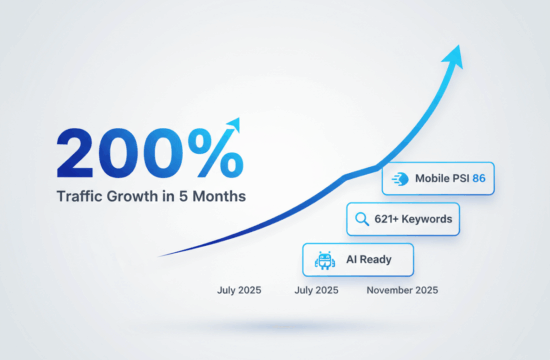
How AI-Ready Architecture Delivered 200% Traffic Growth in 5 Months: TBG Homes Case Study
How AI-ready architecture, custom WordPress and technical SEO delivered 200% organic growth and 621+ keyword rankings for TBG Homes in...
Read article
Become a Technical SEO Expert and Boost your Online Presence
What a technical SEO expert actually does, when to hire one, the interview questions that separate real ones, red flags,...
Read article