


Law Firm Web Design
Law firm websites built to rank, load fast, and win the call.
Custom WordPress web design and development for law firms: practice-area and office architecture built for search, intake forms built into every page, migrations that protect your rankings, and a site your firm owns outright. Built in Raleigh for firms across North Carolina and beyond.
Why Law Firm Websites Are a Different Kind of Build
A law firm website works in one of the most expensive corners of the internet. Personal injury, family law, and criminal defense keywords carry some of the highest costs per click in any industry, which means every visitor who lands on your site and leaves without calling is money spent for nothing. The site has to do three jobs at once: rank for the practice areas and cities you serve, load instantly for someone searching from a phone in a stressful moment, and convert that visitor into a consultation request before they bounce to the next firm in the results.
Most law firm websites fail at least one of those. Many run on proprietary platforms from legal marketing vendors, where the firm does not own its code, cannot move without starting over, and pays a monthly fee for the privilege. Others run on WordPress page builders that ship ten times the markup a clean theme needs, so the site looks fine in a demo and scores in the red on mobile. And nearly all of them treat the free case evaluation form as an afterthought rather than the single most important element on every page.
We build law firm websites the way we build everything: hand-coded WordPress themes with no page builder, your firm’s content model designed in from the start, and the search and conversion architecture built into the templates rather than bolted on. You own the code. You can publish without a developer. And the site is fast enough to compete.
What We Build for Law Firms
Every engagement is scoped to the firm, but these are the pieces that show up in almost every law firm project.
Practice Area Architecture
Structured templates for practice areas, sub-practices, and the questions clients ask within each, so “car accident lawyer” and “truck accident lawyer” each get a page built to rank rather than a paragraph on a shared one.
Office and Location Pages
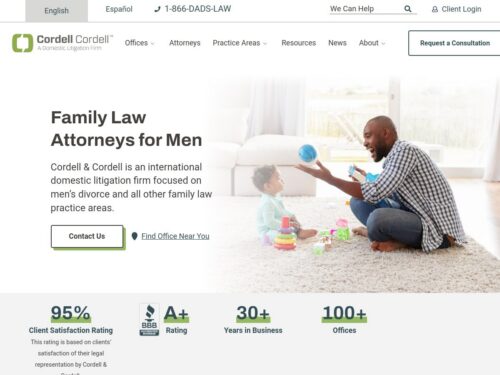
For firms with more than one office, every location gets a consistent, complete page with LocalBusiness and LegalService structured data, hours, directions, and the attorneys who practice there. It is what the map pack rewards, and it is how we built a hundred office pages for Cordell & Cordell from one template.
Attorney Profiles That Rank
Attorney bios with Person schema, bar admissions, practice areas, and results, structured so that searches for an attorney by name land on your site and not on a directory.
Case Evaluation Forms Built In
Intake forms designed into the templates rather than embedded as an afterthought, with click-to-call on mobile, so every practice-area and location page carries the firm’s primary call to action without extra weight.
Results, Reviews, and Verdicts
Case results and client reviews presented in structured, filterable formats that build trust and that search engines can read, with markup applied only where it is accurate and your state bar rules allow.
Migration Without Losing Rankings
Moving a firm off a vendor platform or an old domain is where rankings are most often lost. We map every URL, preserve the ones that earn traffic, redirect the rest, and monitor daily through the first week. See how it worked for James Scott Farrin.
The Problems We See Most in Law Firm Sites
Before we propose anything, we audit what is there. These are the findings that come up again and again.
Vendor lock-in
The site lives on a legal marketing company’s proprietary platform. Every landing page and template change goes through them, the firm does not own the code, and leaving means rebuilding from zero. Farrin.com ran this way until December 2020; it has run on a custom WordPress theme the firm owns ever since.
Page builder weight
Elementor, Divi, or WPBakery layered on a commercial theme. The homepage carries dozens of scripts and stylesheets, mobile PageSpeed sits in the 30s or 40s, and Core Web Vitals fail. Cordell & Cordell’s old site loaded more than 80 script tags on a single page.
Practice areas on one page
Ten practice areas summarized on a single Services page, so the firm cannot rank for any of them individually and Google has nothing specific to show for “wrongful death attorney” searches.
Location pages that are copies
Multi-office firms with location pages that differ only in the city name, which search engines treat as duplicates and which tell a prospective client nothing about who they will actually meet.
Forms that leak
Intake forms buried below the fold, missing from practice-area pages entirely, or built with plugins that add seconds to every load. On a phone, the form and the phone number need to be one tap away on every page.
No structured data
No LegalService, Attorney, or FAQPage markup, so the site is invisible to the rich results and AI answers that increasingly sit above the traditional listings for legal queries.
Built for Search Engines and AI Answers
Legal queries are among the first where Google shows AI Overviews and where prospective clients ask ChatGPT or Perplexity which firm to call. Those systems read the same signals search crawlers do, only more literally: clean semantic HTML, entity clarity about who the firm is and where it practices, direct answers to the questions clients actually ask, and structured data that states the facts in machine-readable form. We build all of that into law firm sites by default. Practice-area pages carry FAQ sections written to be quoted, attorney and office pages carry Person, LegalService, and LocalBusiness schema, and the whole site is architected so that a machine can tell, without guessing, which firm handles which matters in which cities. Our AI optimization service covers this in depth, and for ongoing search work after launch, our law firm SEO services pick up where the build leaves off.
How a Law Firm Website Project Works
Audit and keyword map.
We audit the current site, platform, and rankings, and map every practice area and office to the searches that matter in your markets, so the site is designed around demand rather than the org chart.
Design and content model.
Design that reflects the firm rather than a legal template, and a content model for practice areas, attorneys, offices, results, and articles that the firm can extend for years.
Build and migrate.
A hand-coded WordPress theme, intake forms and integrations built in, every existing URL mapped and redirected, and structured data applied where it is accurate.
Launch and monitor.
Daily rank and crawl monitoring through the first week, Search Console and analytics baselines recorded, and an optional care plan to keep the site fast and secure afterward.
Law Firm and Regulated-Industry Work
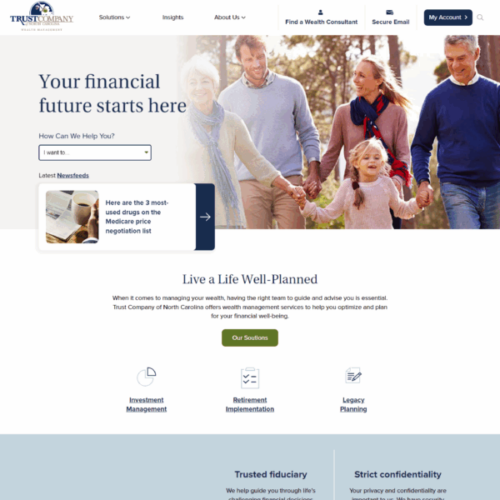
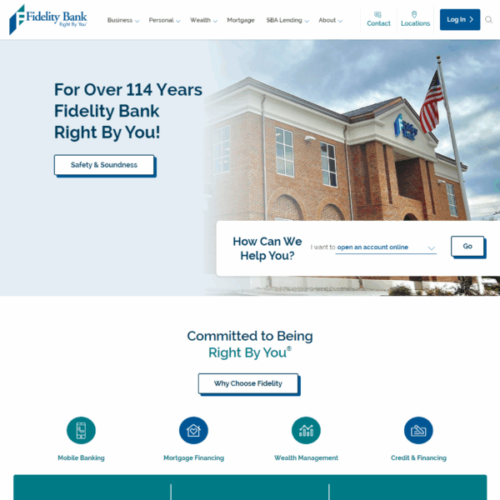
Two law firms and two financial institutions, all on custom WordPress themes built for compliance, speed, and search.

James Scott Farrin
A custom WordPress build that moved one of North Carolina's largest personal injury firms off a proprietary platform in December 2020, on a theme still in production more than five...
Cordell & Cordell
Trust Company
Fidelity Bank
Law Firm Website Questions, Answered
What makes a good law firm website?
A good law firm website does three things at once. It ranks for the practice areas and cities the firm serves, which requires a dedicated, well-structured page for each rather than one shared Services page. It loads fast on a phone, because most prospective clients search from one and Google’s research shows more than half of mobile visitors abandon a page that takes longer than three seconds. And it converts, which means the phone number and case evaluation form are one tap away on every page. Underneath those three, it should be built on a platform the firm owns and can publish to without a vendor, with structured data (LegalService, Attorney, FAQPage) so search engines and AI tools can read who the firm is and what it handles.
How much does a law firm website cost?
It depends on the number of practice areas, offices, and attorneys, whether the project includes a migration off an existing platform, and how much custom functionality (intake routing, case result databases, multilingual content) the firm needs. A single-office firm with a handful of practice areas is a very different project from a multi-state firm with a hundred locations. We scope every project individually and quote a fixed price after a discovery call and an audit of the current site, so there are no surprises. What we do not do is charge a monthly platform fee: when the project is finished, the firm owns the code and the content outright.
Should a law firm use WordPress or a legal marketing platform?
Proprietary legal marketing platforms are convenient until the firm needs something the vendor does not offer, or wants to leave. The firm does not own the code, every change goes through the vendor, and moving means rebuilding from scratch. A custom WordPress theme gives the firm ownership of its site, a content team that can publish without a developer, and the freedom to change agencies without changing platforms. The Law Offices of James Scott Farrin moved from a vendor platform to a custom WordPress theme in December 2020; the same theme is still in production more than five years later, and the firm’s estimated organic traffic grew 286% in the first year after the move.
How do you migrate a law firm website without losing rankings?
Rankings are lost in migrations when URLs change without redirects, when pages that earned links and traffic are dropped, or when the new site launches with technical problems that block crawling. We prevent that by crawling and exporting every URL on the old site before the build starts, mapping each one to its new home, preserving URLs that already rank wherever possible, implementing one-to-one 301 redirects for the rest, updating internal links, and monitoring Search Console and rankings daily through the first week after launch. For firms competing on personal injury or family law terms, protecting that equity is as important as the new design.
How do you optimize a law firm website for AI search?
AI Overviews, ChatGPT, and Perplexity draw on the same signals search crawlers use, read more literally. We give them what they need: clean semantic HTML so content is readable without JavaScript, structured data (LegalService, Attorney, LocalBusiness, FAQPage) that states the facts in machine-readable form, consistent entity information about the firm, its attorneys, and its offices across the site, and direct-answer FAQ sections on practice-area pages written to be quoted. Every law firm site we build includes this by default, and our AI optimization service covers it in depth.
Can you build a website for a multi-office law firm?
Yes. Multi-location firms are where template architecture matters most. Each office needs a complete, distinct page with its own address, hours, attorneys, practice areas, and LocalBusiness structured data, not a copy of the same page with the city name swapped. We built that structure for Cordell & Cordell, a family law firm with more than 100 offices across 30-plus states, from one set of custom templates, so every office page stays consistent and the firm’s team can add a new location without a developer.
Ready for a law firm website you actually own?
Tell us about your firm, your practice areas, and what your current site is costing you. We will show you exactly how we would approach it, with no obligation and no hard sell.