


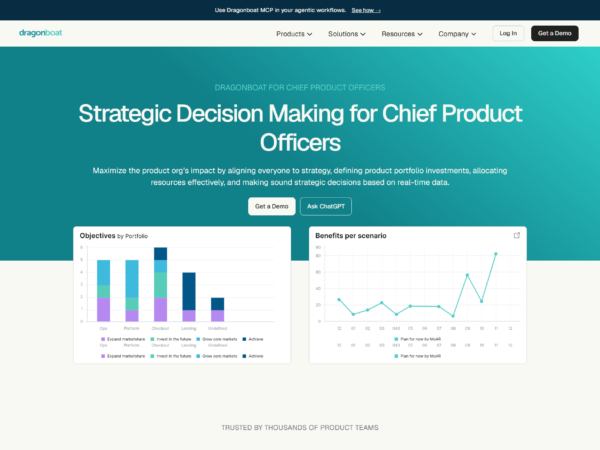
Dragonboat: 61% Mobile PageSpeed Improvement Through Custom WordPress Development
Client: Dragonboat
Industry: SaaS, Product Portfolio Management
Location: Global
Website: dragonboat.io
Timeline: Launched January 2025
Services: Custom WordPress Development, Performance Optimization, Core Web Vitals
The Challenge
Dragonboat is a leading product portfolio management platform helping organizations prioritize and deliver strategic initiatives. As their digital presence grew, their website’s performance had deteriorated to a point where it was actively working against them.
The core issues were measurable and severe:
- Mobile PageSpeed score of 56/100, well below the industry benchmark of 90+
- Largest Contentful Paint (LCP) of 15.7 seconds, far exceeding Google’s 2.5-second “good” threshold
- Slow load times driving visitors away before the page finished rendering
- Failing Core Web Vitals affecting both search rankings and mobile user experience
- A site architecture that couldn’t scale with traffic growth
Google’s own research indicates that 53% of mobile users abandon a site that takes longer than 3 seconds to load. At 15.7 seconds to render primary content, Dragonboat was losing a significant portion of potential customers before they ever engaged with the product.
The challenge was compounded by a design constraint: the existing visual identity and layout needed to be preserved. The goal was a complete technical overhaul, with no visible disruption to the brand experience their audience already recognized.
The Approach
Custom WordPress Theme Development
Rather than patching the existing Elementor-based site, I rebuilt it from the ground up using a custom WordPress theme engineered specifically for Dragonboat’s performance requirements. A purpose-built theme meant no unused code, no page builder overhead, and complete control over how every asset loaded.
The rebuild preserved the existing design in full while replacing the entire technical foundation beneath it.
Performance Optimization
Every development decision was made with Core Web Vitals as the benchmark. Optimizations included:
- Custom PHP development following WordPress performance best practices
- Advanced caching strategies and database query optimization
- Image optimization with lazy loading throughout
- Minification of CSS, JavaScript, and HTML
- Content Delivery Network (CDN) integration for consistent global load times
- Elimination of render-blocking resources
Mobile-First Architecture
With Google’s mobile-first indexing, mobile performance directly determines search rankings across all devices. The rebuild prioritized mobile performance at the architecture level, not as a responsive layer added afterward.
The Results
PageSpeed
| Metric | Before | After | Change |
|---|---|---|---|
| Mobile PageSpeed Score | 56 (Poor) | 90 (Good) | +61% |
Core Web Vitals, Mobile
| Metric | Before | After | Improvement |
|---|---|---|---|
| First Contentful Paint (FCP) | 8.1s | 1.0s | 87.7% faster |
| Largest Contentful Paint (LCP) | 15.7s | 2.3s | 85.4% faster |
| Total Blocking Time (TBT) | 130ms | 0ms | 100% reduction |
| Speed Index | 8.4s | 2.2s | 73.8% faster |
| Cumulative Layout Shift (CLS) | 0 | 0 | Maintained |
What These Numbers Mean
LCP went from 15.7s to 2.3s. Primary content now loads within Google’s “good” threshold. Visitors who were previously waiting over 15 seconds, and largely leaving, now see the page fully rendered in just over two seconds.
FCP went from 8.1s to 1.0s. Users see content in under a second, dramatically reducing the perception of a slow or broken page.
Total Blocking Time dropped to zero. The site is immediately interactive with no input delay, creating a seamless experience from the first tap or click.
Speed Index improved by 6.2 seconds. Visual content loads 74% faster, keeping visitors engaged rather than bouncing.
Key Takeaways
Performance problems compound quietly. Dragonboat’s site looked functional, but the underlying metrics were actively costing them traffic, rankings, and conversions. Data is the only reliable way to surface issues that aren’t visible to the eye.
Custom development makes a measurable difference. The 61% PageSpeed improvement came directly from having full control over the code. There was no workaround that could have achieved these results within the constraints of a pre-built theme or page builder.
Design and performance aren’t in conflict. The rebuild delivered dramatic technical improvements with zero visible changes to the brand experience. A complete re-architecture doesn’t require starting over visually.
Core Web Vitals are a business metric, not just a technical one. Meeting Google’s thresholds affects organic search rankings, mobile visibility, bounce rates, and ultimately conversion, all of which have direct revenue implications for a SaaS business.
Related
This project is one of the examples in our guides to SaaS web design and SaaS SEO, which cover what we build for software companies, the problems we find most often in their sites, and answers to the questions their teams ask us.