

Brand Strategy and Identity
Brand Identity Design Services
Brand strategy, logo design, color and type systems, voice, and guidelines, designed for the screen first and delivered as one coherent system your team can actually use. For businesses that have outgrown the identity they started with.
What Brand Identity Is, and What It Is Not
Brand identity is the system of visual and verbal elements a business uses to be recognized and understood: the logo and its variations, color, typography, imagery style, tone of voice, and the rules for using them together. It is not the same as a logo, which is one element of it, and it is not the same as brand strategy, which is the positioning decision the identity has to express. A good identity makes a business look like what it actually is, consistently, everywhere a customer meets it.
Most of the identity work we do is for businesses at a turning point: a firm that has outgrown a logo made at founding, a company entering a new market, or a business whose website rebuild has exposed that the brand behind it was never fully defined. We handle the whole system, from strategy through guidelines, and because we also design and build websites, the identity we deliver is one that works on screen first, at every size, in light and dark, and in motion.
Brand Identity Design Services
Scoped to what the business needs, from a focused logo refresh to a complete identity system.
Brand Strategy and Positioning
Interviews with founders and customers, a review of competitors’ visual and verbal territory, and a written positioning that states who the business is for, what it does differently, and how it should sound. The identity is designed to express this, not the other way around.
Logo Design
A primary mark with the variations real use requires: horizontal and stacked lockups, a standalone symbol, one-color and reversed versions, and a favicon and social avatar that still read at 16 pixels. Delivered as vector files in every format your printers and platforms ask for.
Color and Typography Systems
A palette with defined roles (primary, secondary, neutrals, functional colors) and accessibility-checked contrast pairings, plus a type system with licensed web fonts, a scale, and rules for headings, body, and interface text.
Imagery and Iconography
Photography direction, illustration style, or a custom icon set, with examples and rules, so every image the business produces after launch looks like it came from the same place.
Voice and Messaging
A tone-of-voice guide with examples, a tagline where one is warranted, and the core messages for the homepage, the elevator pitch, and the proposal cover, written so the team can extend them without a copywriter.
Brand Guidelines
A practical guide your team can link to and share, covering every element above with do-and-do-not examples and downloadable assets, so consistency does not depend on one person remembering the rules.
Designed for the Screen First
Most brand identities are still designed for print and adapted to the web afterward, which is how businesses end up with a logo that does not fit a mobile header, a brand blue that fails contrast against white text, and a display typeface that has no web license. We design the other way around. Every identity we produce is tested at the sizes and in the contexts where it will actually live: a 40-pixel-high header, a browser tab, a social avatar, a dark-mode interface, an email signature, and a loading animation. Colors are checked against WCAG contrast thresholds so the brand is accessible by default. Type is chosen with web performance and licensing in mind. When we build the website too, the identity and the design system are one project, and the brand arrives on screen exactly as it was drawn.

Signs a Brand Identity Needs Work
These are the situations that most often bring businesses to us.
The logo was a placeholder that stuck
Made in a hurry at founding, never revisited, and now on a building sign, a fleet of trucks, and a website it does not suit. The business has changed; the mark has not.
Nothing matches
The website uses one blue, the proposals another, the social accounts a third. Three people have made brand decisions independently because there were no rules to follow.
It looks like the competition
Every firm in the category chose the same navy, the same serif, and the same stock photography. Customers cannot tell the businesses apart because the identities do not ask them to.
It fails on screen
A horizontal logo crammed into a mobile header, brand colors that fail contrast, fonts that are not licensed for the web or load slowly. The identity was designed for a business card.
A new market or offering
The business is entering a new region, adding a product line, or moving upmarket, and the identity built for the old business signals the wrong thing to the new customer.
A website rebuild exposed it
The most common one. Designing a new site forces every unanswered brand question at once: what are the colors, really, what is the voice, what does the mark look like at small sizes. Better to answer them first.
How a Brand Identity Project Works
Discovery and strategy.
Stakeholder and customer interviews, competitive review, and an audit of every place the current brand appears. Output: a written positioning and creative brief we both sign off on before any design begins.
Concepts.
Two or three distinct identity directions, each shown in context (website header, social, signage, a document) rather than as a logo on a white page, so the decision is about how the brand will actually live.
Refinement and system.
The chosen direction developed into the full system: logo variations, color, type, imagery, voice, and applications, with a round of structured feedback at each step.
Guidelines and handoff.
Final files in every format, a brand guidelines document, and a walkthrough with your team on how to use them. If we are building the website, the design system carries straight into it.
Brand Identity and Small Business Branding
For established companies, brand identity is usually a full system project as described above. For newer and smaller businesses, we offer a scoped small business branding package that covers the essentials (logo, color, type, and a short guide) at a fixed price, often alongside a first website. Either way the identity is built to the same standard: distinctive, accessible, and designed for the screen. Our web design and branding overview covers how the pieces fit together.
Design Work
Websites where the visual system was built to express a specific brand rather than a template.
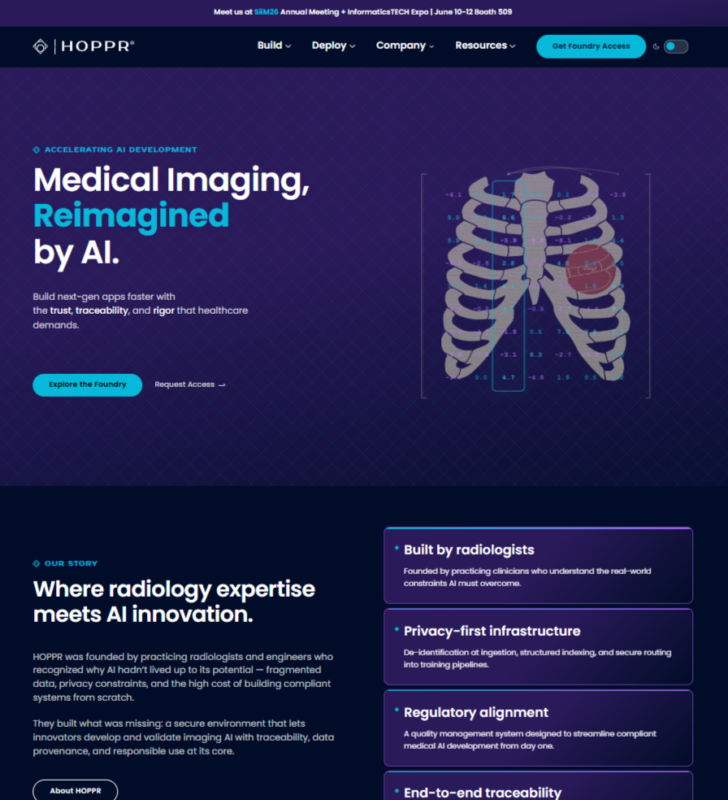
HOPPR
How we rebuilt Hoppr.ai from Squarespace to custom WordPress: performance from 42 to 94, SEO score from 77 to 100, and Core Web Vitals passing outright.
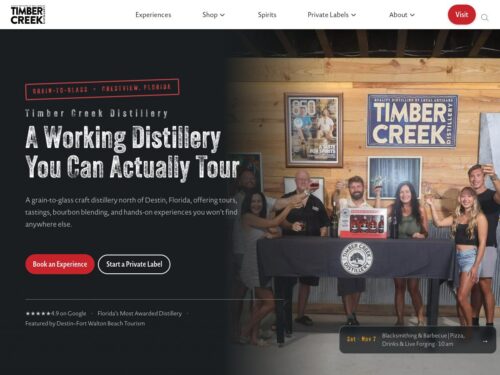
Timber Creek Distillery
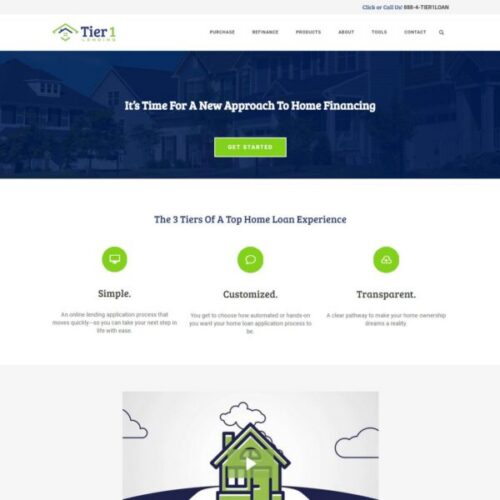
Tier 1 Lending
Building the Tier 1 Lending brand from launch: custom WordPress development, a branded interactive mortgage calculator,…
Custom Development · Design · WordPress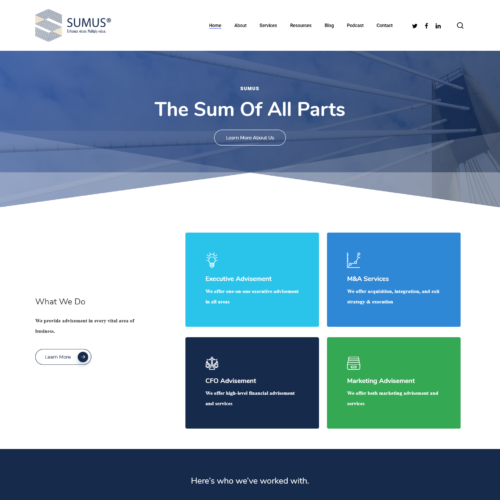
Sumus
Custom Development · Design · WordPressBrand Identity Questions, Answered
What is included in brand identity design services?
A complete brand identity project includes strategy and positioning, a logo with all its variations and file formats, a color system with defined roles and accessibility-checked pairings, a typography system with licensed web fonts, imagery or iconography direction, tone of voice and core messaging, and a brand guidelines document that ties it together. Smaller engagements can be scoped to a subset, most often a logo refresh with color and type. What should never be left out is the guidelines, because an identity without rules drifts within a year.
How much does brand identity design cost?
It depends on scope: a logo refresh with a short style guide is a very different project from a full identity system with strategy, voice, and applications for a multi-location company. We scope every project after a discovery call and quote a fixed price, so there are no hourly surprises. For newer and smaller businesses, our small business branding package covers the essentials at a set price, and it is often bundled with a first website.
How long does a brand identity project take?
A focused logo and visual identity refresh is a much shorter project than a full identity system with strategy, voice, and guidelines, where most of the time goes into the discovery and concept phases because that is where the important decisions happen. We give a schedule with the quote after discovery. Timelines depend heavily on how quickly stakeholders can review and decide, so we structure feedback rounds for a small group that can move fast.
What is the difference between brand identity and brand strategy?
Brand strategy is the decision about what the business stands for: who it serves, what it does differently, and how it should be perceived. Brand identity is the expression of that decision in logo, color, type, imagery, and voice. Strategy comes first, because an identity designed without it is decoration; a beautiful mark cannot fix an unclear position. Our identity projects begin with a strategy phase for exactly that reason, and we deliver the positioning in writing so the identity can be judged against it.
Do you design brand identities for websites specifically?
We design identities for every application, but we design them screen-first, because the website is where most customers will meet the brand and where identities most often break. That means testing logos at header and favicon sizes, checking every color pairing against WCAG contrast thresholds, choosing typefaces with web licenses and performance in mind, and defining how the brand behaves in dark mode and in motion. When we also build the website, the identity and the site’s design system are delivered as one coherent project.
Can you refresh our existing logo instead of starting over?
Often that is the right call. If the current mark has recognition and equity but has aged, fails at small sizes, or lacks the variations modern use requires, a refresh preserves what customers know while fixing what does not work. We will tell you in the discovery phase which path the situation calls for. A full redesign makes sense when the business has changed enough that the old identity now signals the wrong thing.
Ready for an identity that matches the business you have become?
Tell us where the brand stands today and where the business is going. We will show you what a scoped identity project would include, with no obligation.
Strategic Insights

Winning the consensus layer: the new SEO battleground
Ranking #1 isn’t enough. Learn how the “consensus layer” works and how to earn AI mentions with clarity, diversity and...
Read article
AI Model Testing Prompt Template for Your Brand: A Complete Guide to AI Brand Visibility
A copy-paste AI model testing prompt template to audit your AI brand visibility — see how ChatGPT, Gemini, and Perplexity...
Read article
Why AI LLMs Prefer Fast, Well-Optimized Websites (And What That Means for Your Business)
AI systems like ChatGPT and Perplexity cite fast, well-optimized websites more often. Learn why website performance impacts AI visibility and...
Read article